
When I first became certified as a Focusing trainer, I got the feeling that TAE was an unattainable philosophical endeavor that I would probably never be able to understand. And I didn’t understand it, even though I attended a three-day workshop with Gene, Nada and Kye in 2004, and several more workshops. Finally in 2012, Evelyn Fendler-Lee took me under her wing and I finally started to understand a bit about what was happening, and gradually I started teaching on my own.
Because I had no background in philosophy and because it took me so long to understand TAE, I feel that I’ve become a good TAE teacher for people like me. I keep my classes small so that I can guide each person through the process, and they also get to observe how TAE works with their classmates. I’ll talk more about that later.
Why Thinking at the Edge (TAE) should be included in Focusing training
A main advantage of TAE is that it takes place over time. In my opinion, too much happens in TAE for it to be absorbed and integrated in a weekend workshop. Richness and confidence develop over time as you befriend the felt sense, get to know it, and allow it to surprise you with its relevance to whatever you choose to explore. That’s why my TAE groups have been online, once a week for two months or once every other week for four months. I’m currently exploring ways to teach in person in a way that allows people to absorb the process over time.
Once people have experienced TAE, their attraction to learning more about Gendlin’s philosophy is awakened naturally.
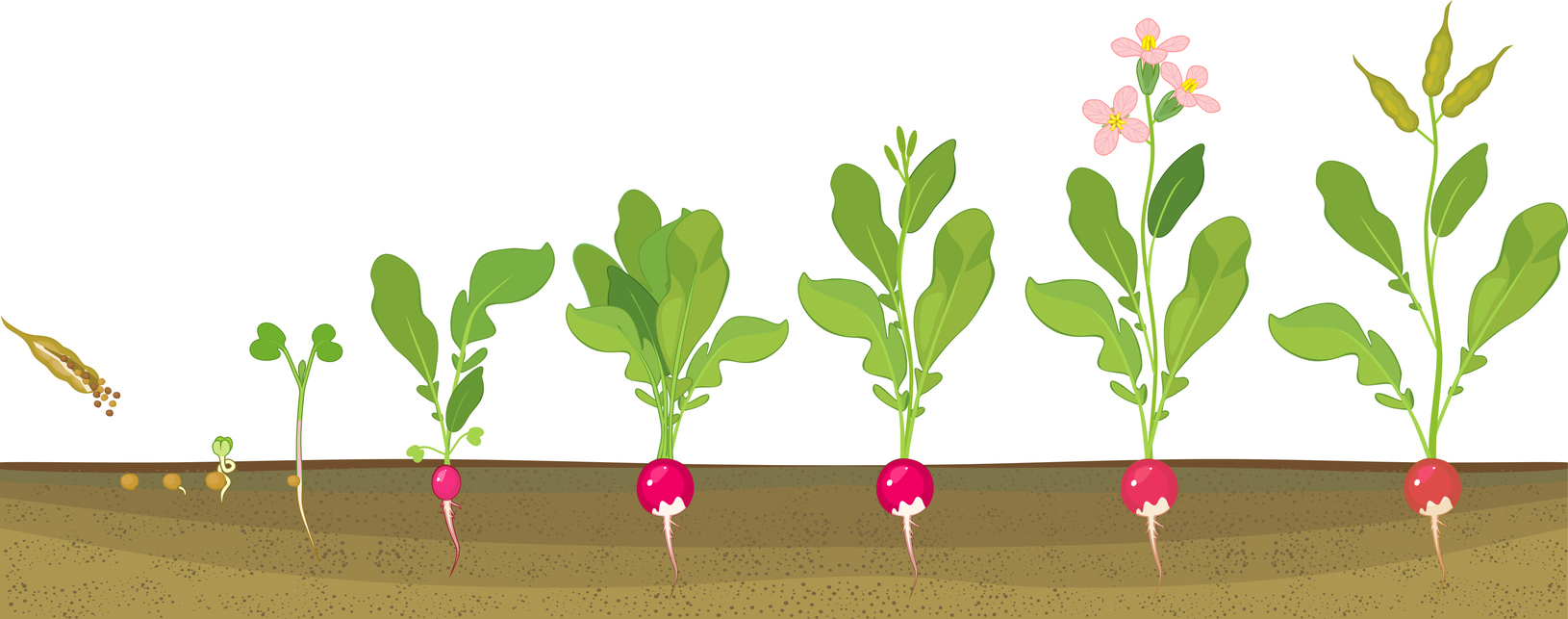
Felt sensed words are like seeds. Spacious Listening is fertile soil.
Words that arise from the felt sense are like seeds, full of implicit meaning that can carry forward into a next step for the Focuser.
When these words are heard and reflected back by a Listener who has no need to intervene, to suggest, to interpret, to help or to guide, the seeds fall on fertile soil. At that moment we must honor the growth process that is happening inside the Focuser. It is silent, beyond the perception of the Listener. It’s a beautiful time of patience, of knowing that the process of the seed filled with meaning is unfolding naturally in the fertile soil of your companionship.
This is not understood sufficiently in the Focusing world, where often advanced training concentrates on learning how to guide someone through the process. It’s very important to learn the delicate art of guiding new people, but once someone has sufficient experience in Focusing, guiding is rarely necessary. After you learn to guide well, you can give that up for the more spacious listening that is fertile ground for TAE.
When two people understand this, the seeds full of meaning that arise from their partnership germinate easily and grow. That is a partnership in Thinking at the Edge.
Unclear felt sense vs emotional felt sense
It took me a very long time to ‘get’ that the Felt Sense was about something that I didn’t understand. I had been tuning in to the felt sense that has an emotional component to it. Now I often feel the felt sense as a kind of cottony feeling. Instead of bearing down on it and trying to “wrap my brain around it”, I see it as a signal to pause and welcome the feeling of not knowing.
The best place to start TAE is with a bodily sensation that we know has meaning but is hard to put into words.
Not only the Steps, but spacious Listening
For me, TAE is not only the different invitations (steps) involved, but also the spacious way of listening that I mentioned at the beginning. This spacious way is outlined in Gendlin’s article The Small Steps of the Therapy Process: How they come and how to help them come. TAE is very fruitful in therapeutic relationships. But because I think it is important for people to practice TAE outside therapy as well, I have edited the Small Steps article to remove the words “therapy”, “therapist” and “client”, and replaced them with “Focusing” and “TAE partnership”.
As Gene says in the Small Steps article (p 2 of edited version):
…..Notice the silence that comes there. It is part of what listening is for. …..what you had ready to say has been heard and responded to. Now you have nothing to say, and yet you sense the problem. It is not all resolved, of course. You have an unclear sense of it—right there — an unclear edge. You sense it physically, without more words.
….. I hope you will stay in that silence, with that unclear sense, right there, until the next thing comes, from it.
New ways to prepare to take TAE
TIFI is hosting a monthly discussion of this article on the second Fridays of each month at 8 a.m. Eastern. It will be led by me and my eight advanced students who are training to become TAE facilitators in our Listening for Life TAE training program. We call the discussions TAE Tertulias. They start on June 13.
I’ve come up with course called Foundational Practices of Thinking at the Edge based on Gendlin’s article. With the course, motivated people can prepare themselves for TAE in just 6 or 7 weeks. People who are not motivated (i.e. people who are just taking a university course without knowing about Focusing and TAE) might need a lot more preparation.
More aspects of TAE that should be part of regular Focusing training.
1. Instancing, finding patterns in instances, and crossing
Thinking at the Edge shows us the importance of “instancing”, of allowing the felt sense of our topic to lead us to moments in our lives that somehow are instances of what we are exploring. An instance is an actual life experience. You can pick it up and look at its details in a way you might have missed when it was actually happening.
By doing that, you can see the “pattern” or imprint that you have been carrying with you from the experience. Being able to see what you have been carrying enables you to engage with it and use it as a source of detailed information about your life. Because your felt sense led you to it, your instance shows you how deeply the felt sense understands the connections between your topic and your experience. It’s a knowing that you can trust, because the felt sense is showing you what really happened. You lived it.
For instance: Earlier this year, when I was working on how I could bring Focusing and TAE more out into the world, my felt sense took me to my grandmother. She was not a cuddly apple-pie type grandma. She was a dynamic self-made businesswoman, who created several businesses by resolving situations in her own life. I had been discounting the example of her life because she could be a domineering, egotistical person. I felt shut down around her. But now I could see that she was a great example of putting herself out there. She saw the relevance of her own needs to what was needed in the world.
One instance of this: she arrived alone in San Francisco in 1939 when she was in her 50s. She looked around and said, “How would an elegant, charming woman like myself find the kind of male companionship to which I am accustomed?” She didn’t see how that could happen. So she opened the Jean Merrick Social Registry, an introduction service for men and women. The business was so successful that by 1957, she bought a freezer-sized Univac computer, to help her match people with similar interests and hobbies. Introduction services didn’t really exist at that time, but that didn’t stop her. Re-examining what I knew about my grandmother helped me tap in to her confidence and energy in bringing something new to the world.
The pattern I saw was: When you address a need in your own life in a dynamic and self-confident way, the world responds.
TAE Instances don’t necessarily have to come from the distant past. This week I settled into a lovely Airbnb in Spain for the month of April. In my travels to get here, I lost the adapter that lets me charge my phone with a European plug. My hosts told me there was a store within walking distance where I could buy an adapter. The only route to the store was next to a highway with cars and trucks whizzing by at high speeds. There was a slight shoulder on the highway but it didn’t feel safe to walk there. Beyond that was a narrow, raised strip of earth covered with wild grasses and herbs bursting with tiny spring flowers. It felt safer there and I could make my way at a better distance from the speeding cars and trucks.
The pattern it showed me was: Next to the rush of civilization speeding toward current societal goals, I can make my way toward what I need while staying on land that is bursting with life and growth.
Once you have two instances and once you’ve seen the patterns, or imprints, or takeaways inside them, you can hold them together on a felt sense level and allow them to cross. Here, crossing has a kind of biological sense, like a grapefruit tree crossed with an orange tree making a new kind of fruit.
By crossing the pattern of one instance with the pattern of another, something magical happens, like the sudden formation of a rainbow when there is the right amount of water vapor and sunlight in the air. You see something totally new that you didn’t see before.
So, to review, my two patterns were:
Grandmother:
When you address a need in your own life in a dynamic and self-confident way, the world responds.
Highway:
Right next to the rush of civilization speeding toward current societal goals, I can make my way toward what I need while staying on land that is bursting with life and growth.
When I crossed the two patterns I saw: I can accept and be inspired by my grandmother’s example as part of my heritage, while at the same time staying on a natural path that suits me, alongside the rushing traffic of current civilization
Instancing (Step 6), extracting patterns from instances (Step 7) and crossing the patterns (Step 8) are practices that are usually not taught in Focusing training.
They don’t require a background in philosophy. They do show you the power of the felt sense in leading you to life experiences that are relevant to your situation. Why should Focusers not learn this very useful aspect of felt sensing as part of advanced Focusing training?
Kye Nelson, who was Gene’s Focusing partner for many years, described finding an Instance in this way: Once you have a felt sense of something you’d like to explore,
Ask your felt sense “when was there a time that has to do with this?” Then wait… let your felt sense “hand” you an instance, rather than bringing up an already-compiled mental list of times or going looking for them. Sometimes, what your felt sense hands you is a little surprising; not what you would have automatically reached for, but in some way “just the thing”. —Kye Nelson, Thinking Fundamentally—http://www.kyenelson.com/docs/Thinking%20Fundamentally.PDF
Instancing exercise
Take a few minutes to practice this. If you do it with a partner, it might be easier. Be sure to agree on who will keep the time, so you each can have equal turns.
During your turn, ask your felt sense to hand you an instance that somehow has to do with something you want to explore—a new direction in life, insight on something that stresses you, a creative project you’ve been putting off, a way to bring Focusing and TAE more into the world…or whatever in you is responding to the invitation.
Before you start, take a moment to stretch and breathe, and shake off anything that doesn’t belong to this moment, like a wet dog shakes off water at the beach.
Get settled on what you’re sitting on, feet touching the floor if possible, breathing and sending roots down into the earth. Now take this idea of something you’d like to explore, and let your attention go down into your body. Allow a felt sense to form of this wanting, this felt fascination that you have. Notice where it is in your body. Does it have a shape or color or texture? Does it have a weight or a temperature? Is there an image or a song that comes to you? Does it have an emotional quality? Does it feel impossible? It’s OK to notice that too. For now, just concentrate on the wanting, not the impossibility. Briefly write down what you saw before you start your turn with a partner..
2. Working with words:
Leaders and political movements know that finding certain words that provoke emotional reactions are effective in swaying public opinion and votes.
Thinking at the Edge gives us a way to name that phenomenon and offer an alternative to it.
I would like us to show how manipulative words eliminate the possibility of listening. When we hear a simple word that has been given political meaning, we can point out that it is designed to produce an effect, and open the space for asking
“What does that word evoke in you?”
“What do YOU want that word to mean?”
That’s a simple way to introduce the idea that words are not defined only by what you find in the dictionary. People have the right to notice the intricate felt meanings of words. If felt sensing is going to help us emerge from the current dysfunction of democratic systems, we have to educate people to be able to use it very practical ways. That is another reason why TAE should be included in basic Focusing training.
A philosophy that you understand by doing it
We have something to offer to the world, a philosophy that you understand by doing it. The very act of doing a Focusing partnership is a demonstration of the responsive order, a living process that changes as we allow words or gestures or art to come from each new moment, be received, and then integrate the growth steps that happen from each interaction.
Americans especially have no use for philosophy. It is automatically rejected as a waste of time. But the founding fathers of the United States were philosophers. Our demonstration of Focusing and Listening is, to me, essential to the re-invention of democracy.
It’s important for human beings to get in touch with this capacity that we have for sensing into life in a way that is bigger, that takes more into account than just the dry, gathered data, or just our strongly felt emotions. It is as important for us regular people to get access to that as for philosophers and academics.
It’s enough to have a body and to listen to it, and have someone listening to you as you listen to it.
Shared leadership through felt sensing and Listening
In 1993, Thich Nhat Hanh said,
“It is possible the next Buddha will not take the form of an individual. The next Buddha may take the form of a community, a community practicing understanding and lovingkindness, a community practicing mindful living.”
In TAE, we have the right to sense into what we want our words to mean. For instance, the words “understanding and lovingkindness”, are very broad and vague. Here is what I want “understanding and lovingkindness” to mean:
Felt sensing is a commitment to oneself, to trusting ones life process and finding ones own voice. As we make time and space for Focusing, our bodily knowing responds to us. We learn that it is safe and forward-moving for us to trust it.
This growing respect and trust of our bodily knowing makes us open to listening to others in a way that allows them to engage with their own felt senses.
In a community of Focusers and Listeners, space is provided for all to pause and find their own voice as situations unfold. When this spacious listening is provided, leadership can be shared.
Felt sensing shows us all how to take our part in leadership in community, not by following rules, concepts and practices, or by covering up how we feel in order to be kind and loving, but by learning to trust our bodily felt sense of situations and communicate it to each other.
Our next 8-week online class in Thinking at the Edge (TAE)
Felt sensing and spacious listening are fertile ground for seeds of thinking to germinate, sprout and flourish.
Our 8-session video course is designed to give you a taste of TAE. The next course starts Tuesday, June 10. Find out more at https://possibility-space.com/